TrustEvan connects homeowners with water damage restoration providers who can help assess moisture, remove water, dry affected areas and reduce the risk of further property damage.
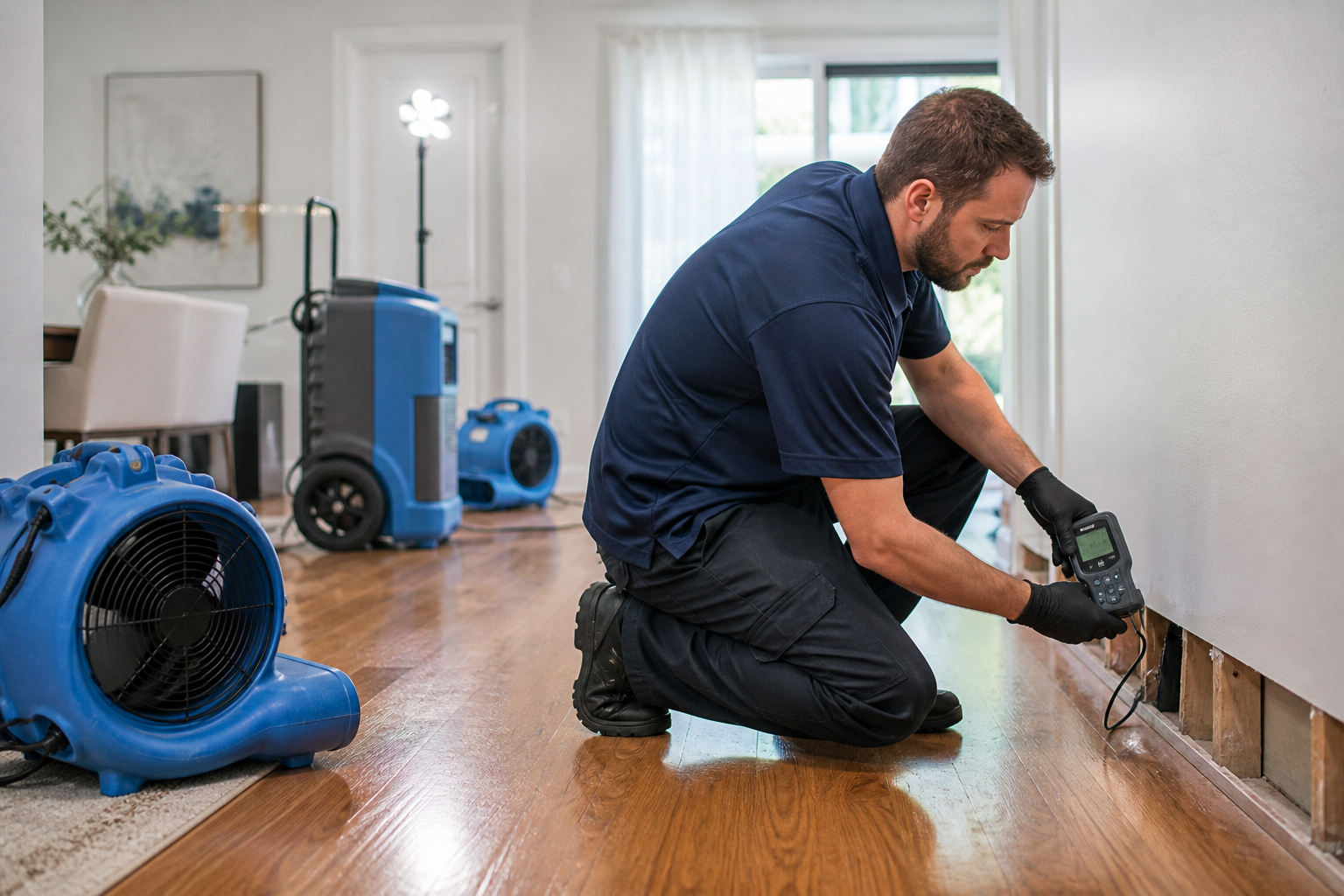
Water damage can happen after burst pipes, appliance leaks, roof leaks, sump pump failure, overflowing fixtures or storm intrusion. The visible water is only part of the problem. Moisture can move behind baseboards, under flooring and into wall cavities, where it may weaken materials and create conditions for odor or microbial growth.
Plumbing failures, water heater leaks, washing machine overflow, backed-up drains, roof leaks and weather-related intrusion are frequent sources. Each situation requires a careful response based on the amount of water, the affected materials and how long the moisture has been present.
Restoration providers use moisture meters, air movers, dehumidifiers and extraction equipment to locate and dry affected areas. Proper documentation and drying targets can help limit secondary damage and support a clearer repair plan.
If it is safe, stop the water source, avoid standing water near electrical hazards and move small valuables away from affected areas. Do not assume a surface is dry just because it looks dry. Porous materials can hold moisture below the surface.
Fast action matters because moisture can spread quickly through flooring, insulation and framing. A restoration provider can evaluate what can be dried, what may need removal and how to reduce the chance of recurring damage.